Industry Collaboration
UCLID studies the physics of liquids, vapors, and the interfaces between them at the smallest and most extreme scales: nanometer-thick films, cryogenic temperatures, and microgravity. That same physics sets the limits of many high-value industrial processes. We work with industry partners on problems where evaporation, condensation, wetting, or thin-film behavior determines yield, throughput, or reliability, and where commercial simulation tools reach the edge of what they can resolve.
Where our expertise applies
| Industry problem | Underlying physics | UCLID capability |
|---|---|---|
| Semiconductor processing: wet clean, rinse, and dry of patterned wafers; residue and watermark defects; capillary-driven damage to fine features | Thin-film evaporation, contact line dynamics, film rupture and stability, capillary forces | Thin film models resolved down to the contact line; interferometry and ellipsometry of evaporating films; contactless cleaning with Leidenfrost droplets (MS thesis, 2025) |
| Cryogenic processes and equipment: cryogenic cooling, cryogenic process steps, and handling of liquid H2, N2, CH4 | Cryogenic phase change, wetting, solid–fluid heat transfer at low temperature | Cryo-neutron experiments and validated cryogenic phase change models |
| Vapor delivery and vacuum processing: precursor vaporization, condensation on chamber surfaces, cryopumping | Non-equilibrium interfacial kinetics, accommodation coefficients | Molecular dynamics → kinetic theory → CFD, with no tuning coefficients |
| Thermal management: liquid and two-phase cooling of electronics, chucks, and power hardware; heat pipes and vapor chambers | Boiling, condensation, wicking, critical heat flux | Multiscale phase change CFD; porous/wick transport |
| Wetting control and liquid–liquid interfaces: emulsions, separations, microfluidic handling, and wet processing where wetting and dewetting must be controlled | Surfactant adsorption, interfacial tension, contact angle hysteresis | Reversible, temperature-switchable wettability of oil–water interfaces (Langmuir cover article, 2026) |
| Process monitoring: detecting two-phase flow regime changes and approach to critical heat flux in closed hardware | Acoustic emission from interfacial events | Acoustic diagnostics with data-driven signal analysis |
| Hydrogen and space systems: propellant storage, boil-off, transfer | Phase change in cryogens, microgravity fluid management | Neutron imaging and ISS flight data analysis |
What a collaboration can look like
- Sponsored research projects: a PhD or MS student working on a focused problem, with regular technical reviews with your engineering team.
- Model development and validation: subgrid interface models (thin film, kinetic boundary conditions) that plug into commercial or in-house CFD and remove empirical tuning parameters.
- Diagnostics and testing: optical, interferometric, and acoustic measurements of films, droplets, and two-phase flows under controlled conditions.
- Technical training: short courses in CFD and multiphase flow for engineering teams. These draw on a CFD course taught every year, where more than 60 individually scoped student projects have covered aerodynamics, propulsion, heat exchangers, battery and CPU thermal management, and multiphase flow, and on classroom technology built in-house (see Teaching), including an AI assistant that answers questions from a team’s own training material.
- Talent pipeline: co-op and internship placements, and early access to graduating students trained in multiphase CFD, molecular simulation, and experimental diagnostics.
Track record
- NSF CAREER award (2024); ASTFE Early Career Researcher Award (2026); ASME Rising Star of Mechanical Engineering (2025)
- Experiments at national neutron imaging facilities and analysis of NASA International Space Station data
- Peer-reviewed publications in Physical Review Fluids, International Journal of Heat and Mass Transfer, Applied Thermal Engineering, Cryogenics, Colloids and Surfaces A, Langmuir (cover article), and others (full list)
- Invited talks in academia and industry, including Ericsson (Sweden), Hokkaido University (Japan), and the University of Manchester (UK) (all talks)
- Graduates now at Ethicon (J&J MedTech), Virginia Transformer, Johnson Controls, and FERNO, and in PhD programs such as Rice University, with student co-ops at GE Aerospace, Toyota, and MSA Safety (people)
Get in touch
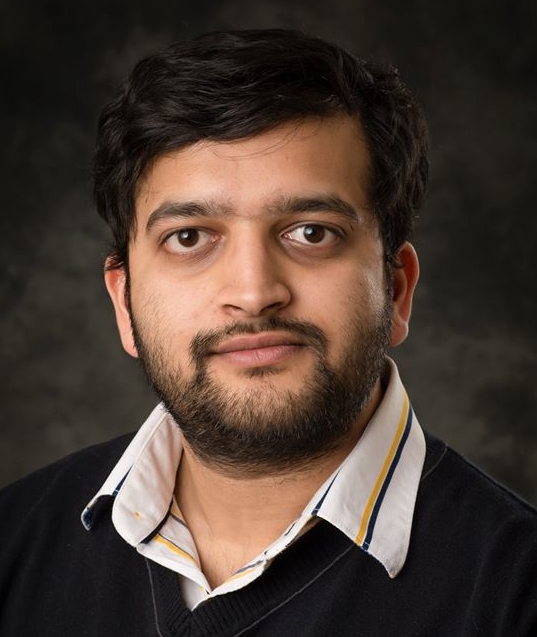
To discuss a project, contact Prof. Kishan Bellur.